
Possessive nouns are a key part of the English language that help show ownership and clarify meaning in sentences. At a glance, possessive nouns seem pretty straightforward, however, if you do not teach them explicitly, you will see many discrepancies in your students’ writing (mixed-up apostrophes, extra letters, etc).
Whether it’s Sarah’s book or the dogs’ bowls, understanding how to use them correctly can make your class’s writing make more sense (isn’t this every teacher’s goal?). But how do you teach this concept in a way that actually sticks?
After teaching for 20+ years, I believe I’ve perfected a consistent and explicit grammar routine for all the skills. In this post, I’ll break down what possessive nouns are, the rules for using them, and engaging ways to teach them—so your students can master them with confidence!

What are possessive nouns?
Possessive nouns show ownership, letting us know who or what something belongs to. They can be singular or plural.
A singular possessive noun means one person, place, or thing owns something (e.g., the dog’s toy). A plural possessive noun means more than one person, place, or thing owns something (e.g., the dogs’ toys). Understanding the difference helps make your student’s writing clearer and more precise!
Examples of Possessive Nouns
| Type of Possessive Noun | Example |
|---|---|
| Singular Possessive Nouns | The boy’s bike is orange. |
| Plural Possessive Nouns (ending in a ‘s’) | The musicians’ performance was great! |
| Plural Possessive Nouns (without ending in ‘s’) | The men’s suits were black. |
Possessive Nouns Spelling Rules
- To form a singular possessive noun, add an apostrophe + s to the end of it.
- If the plural noun ends in an s, add an apostrophe after the s to make it possessive.
- If a plural noun does not end in s, add an apostrophe + s to make it possessive
How to Teach Possessive Nouns
Although possessive nouns aren’t quite as tricky to teach as some other grammar concepts, it’s still important to stay consistent with a weekly routine. This way, you can ensure you are explicitly teaching the skill, your students know what to expect, and there is ample amount of time to practice.
Develop a Weekly Routine

My weekly routine is always the same for each and every new grammar skill I teach. Every Monday, I teach the mini-lesson and practice as a whole group. Tuesdays are reserved for partner practice and a quick exit slip to check for initial understanding.
Wednesdays are always my students’ favorite day, as it includes a fun center activity that allows them to review their skills in a collaborative way. On Thursdays, we connect the skill to reading and writing, and finally, on Fridays, my students take a quick assessment.
Keep practice activities consistent

There are so many different possibilities when teaching grammar to your students, however, it’s crucial to keep them consistent week after week. I typically only have between 15 and 20 minutes to squeeze in my grammar lesson, so there is no time to waste explaining new games and directions.
Below are some great ways to introduce, practice, and assess possessive nouns!
Use Visuals & Teaching Slides

I like to start each week with a PowerPoint presentation to introduce the new skill. This way, your visual and auditory learners are seeing and hearing the grammar concept and its rules. I know that students learn best while engaged, so I make sure each PowerPoint has a few opportunities for whole-group practice.
Throughout the PowerPoint, I like to have my students get up and do corner sorts, use whiteboards to record individual answers, and include plenty of time for turning and talking.
Complete Word Sorts

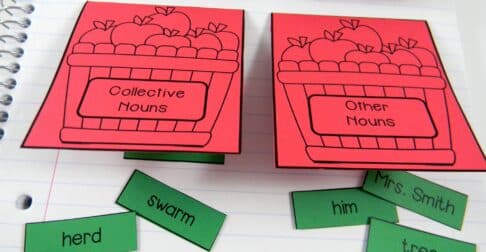
Word sorts are a simple yet effective way to practice different grammar concepts. For possessive nouns, you could give students a mixture of singular and plural possessive nouns to sort in two columns, or have your students sort possessive and non-possessive nouns (examples and non-examples).
Play Grammar Games with Task Cards
Grammar Games are a great way to pique engagement and help to ensure students are grasping the concept. By incorporating the skill in your weekly literacy centers, students are gaining even more practice.

I typically alternate between 3 different games throughout the year (to keep consistency) while just switching out the specific grammar skill. This way, students become very familiar with the rules and can spend the entire center practicing the skill at hand (vs. learning new rules and games).
Examples of task card games include Roam the Room, memory, GoFish, or pairing them with a simple game board. Task Cards allow for some creativity on your end.
Read and Write with a Grammar Gazette

Each week (on Thursdays), my students have the chance to locate and apply the grammar skill in context. The Grammar Gazette is a fun news story that includes examples of possessive nouns. Then, students apply what they learned about the skill to their own writing.
Books and Videos to Help Teach Possessive Nouns
For every new grammar skill, I love to include a variety of books and videos to help drive the concept home. It’s great for kids to see the information in a variety of formats and delivered in various ways. Here are some of the best books and videos to help teach possessive nouns.
1. A Mink, A Skink, A Skating Rink: What is a Noun?
Although not directly written about teaching possessive nouns, this is a great read aloud to review nouns and then practice changing singular nouns to possessive.
Your students will love the silly rhymes, and you will love the ample amount of teaching opportunities.

2. Merry-Go-Round
This book touches on all things nouns! It’s jam-packed with information and helps to show children the many different grammatical forms of nouns.
The illustrations are colorful and engaging, and it can be used as a tool across many different age groups.

3. Possessive Nouns
This teacher-created video does an excellent job of introducing possessive nouns + providing many examples.
It starts out by showing an apostrophe and the different uses of one, then dives into all things possessive nouns. The speaker speaks slowly while showing examples without unnecessary stimuli.

4. The Apostrophe Song
If you find your students are struggling to remember the apostrophe, this song can help! It’s less than 2 minutes long, and MC Grammar always does a wonderful job engaging the kids.

4. What are Possessive Nouns?
Another great video that can be used as an introduction, intervention, or end-of-the-unit review!
Tutoring Hour uses a fun animation while showing possessive nouns in action.

3rd Grade Grammar Unit
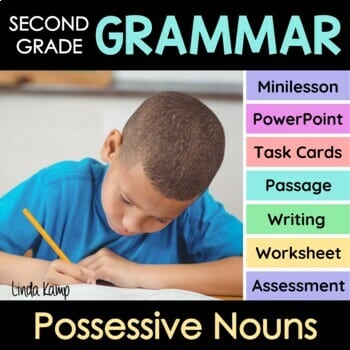
I hope you found these tips and tricks helpful in designing your perfect grammar schedule! If you’d like to make it even simpler, be sure to check out my complete 3rd-grade possessive nouns unit. If you’re a second-grade teacher, I have a 2nd-grade possessive nouns unit as well. Each week inside the units comes with a done-for-you lesson plan, PowerPoint lessons and practice slides, task cards, a Grammar Gazette reading passage, a full-page grammar poster, and an assessment.













Leave a Comment